CT scans for dogs and cats
When you need to see inside. CT shows what overlapping structures hide on an X-ray, and it takes just one short anaesthetic, in a hospital building that is open 24/7.
- Price
- from €159 with anaesthesia, medicines and materials by actual use
- Report
- within 24 hours on the fast track
- Results
- online via a permanent link, and with your vet too
Professional diagnostics since 2018
What we use CT
for most often
Other areas we scan: neck and larynx, teeth and jaw, injuries and acute conditions. Your vet decides which area to examine, based on what needs to be confirmed or ruled out. If you are not sure, give us a call.
Cases where
the scan was decisive
Real examinations from our scanner: what the patient came in with, what the CT showed and what it meant. The images come from that patient's own CT, not stock illustrations.
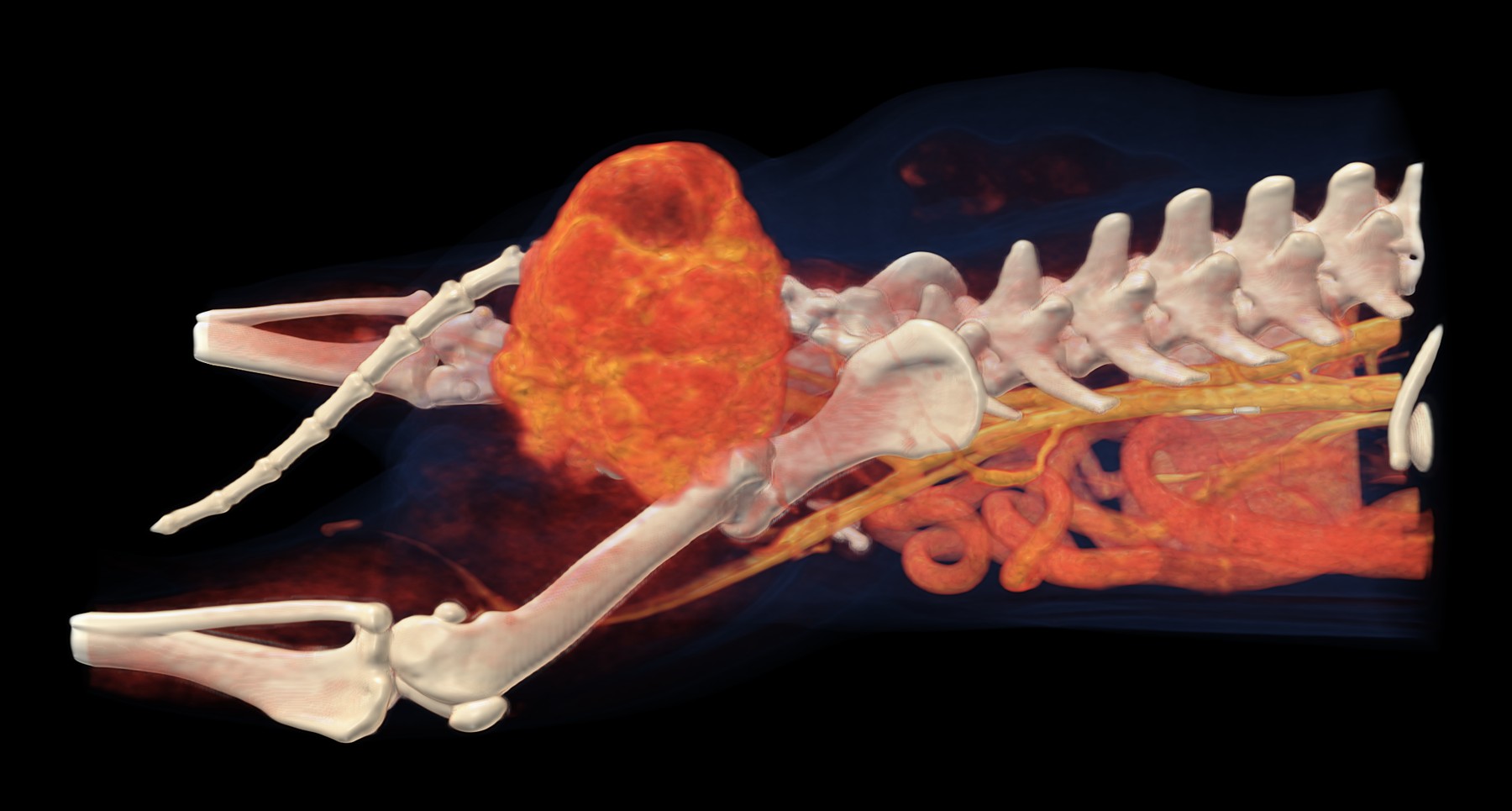
Oncology
A CT scan before treatment showed how far the sarcoma by the hip extended
dog, mixed breed, spayed female, 11 years
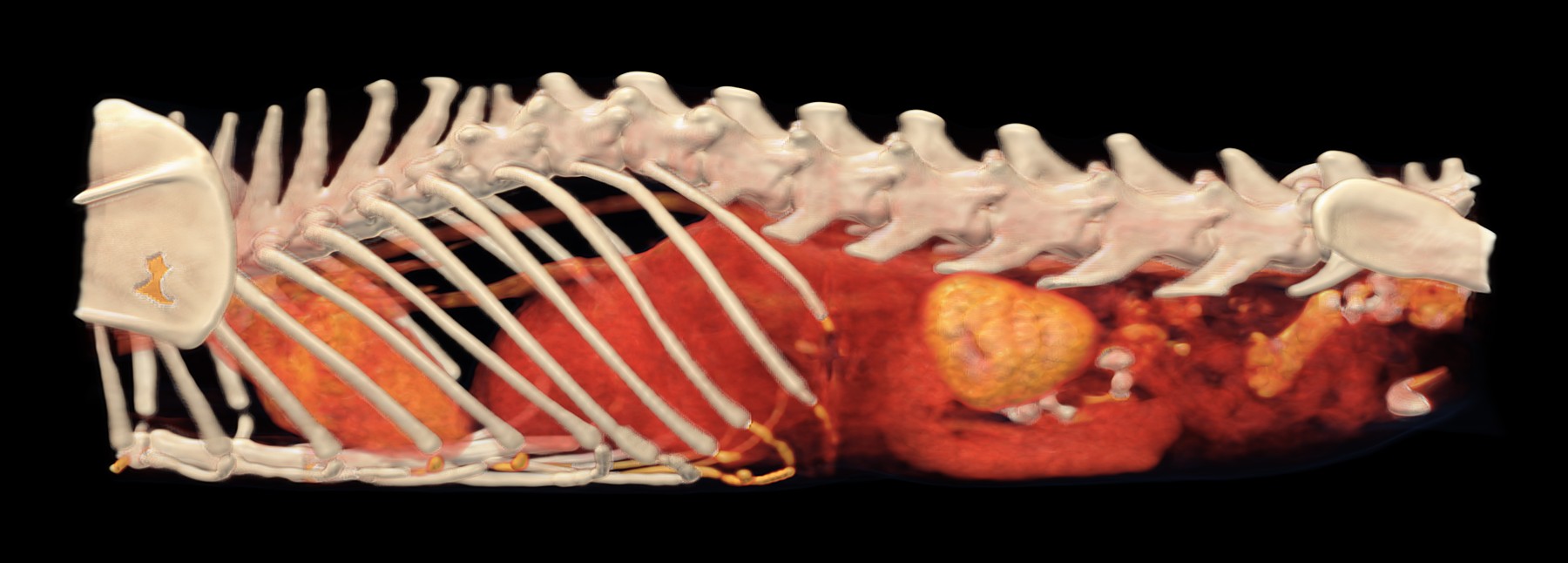
Oncology, Abdomen, Head and neck
She was losing weight and vomiting blood. CT showed the problem was not just the thyroid
cat, domestic shorthair, spayed female, 16 years
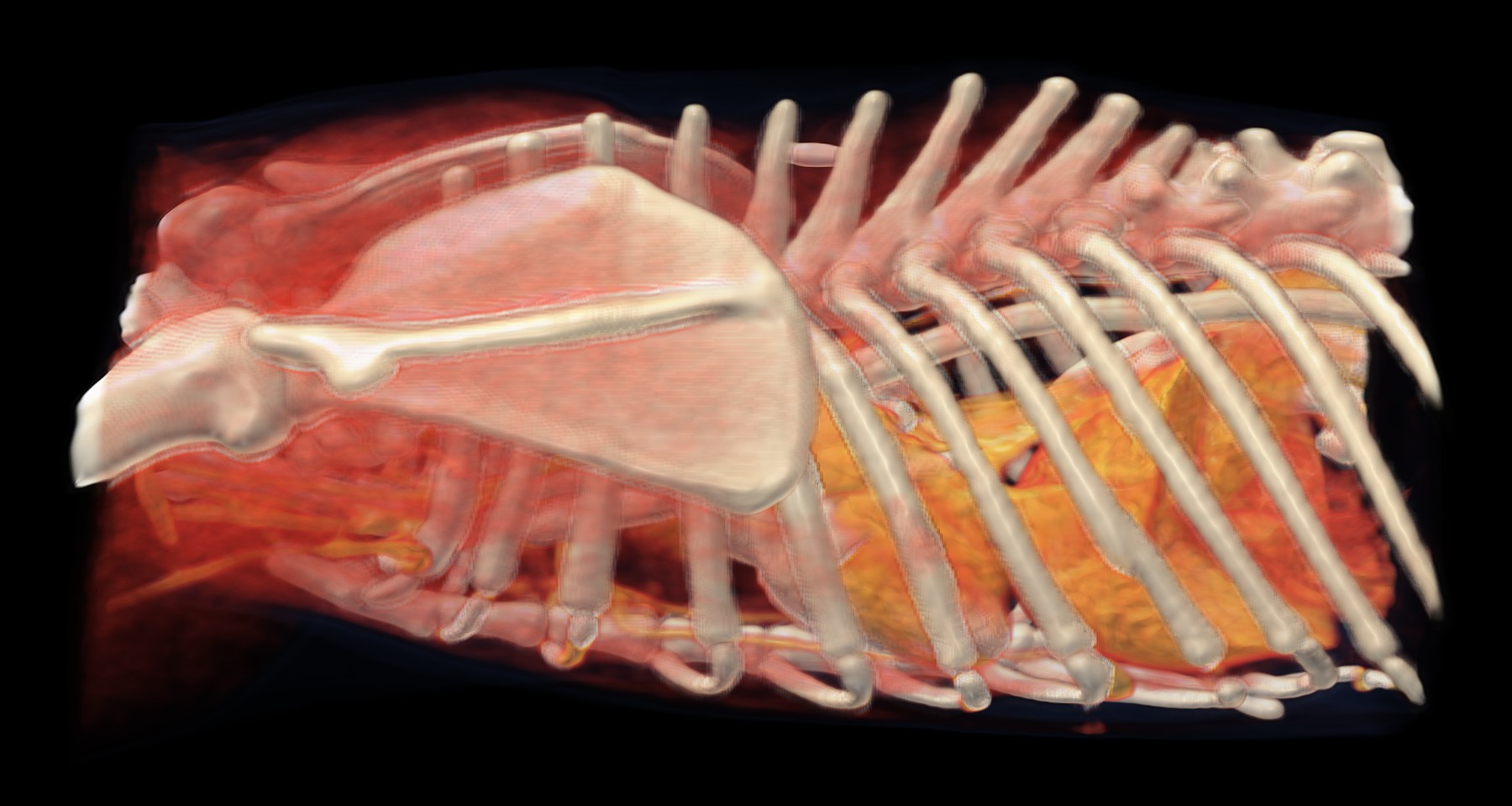
Chest and lungs, Oncology
Breathing difficulties after tumour surgery, and what CT showed in the chest
cat, domestic shorthair, spayed female, 9 years
How it works
Book online
Choose the examination and appointment and enter your contact details. If you are already our client, we verify you with a code sent by email or SMS. The summary shows the price including anaesthesia. You pay by card and the appointment is confirmed. Medicines, consumables and contrast agent are charged according to actual use at the clinic.
12 hours before arrival
The patient stops eating. Water is allowed. Any long-term medication should be continued without interruption.
Arrival and scan
We anaesthetise the patient and scan. If an older or unwell patient has no recent results, we examine them first. A vet and a radiographer supervise the patient throughout.
You collect the patient
You go home once the patient has woken up, usually after 3 to 5 hours. The report and images are available through your permanent online access, and we also send them to your vet.
No food for 12 hours before the scan. Water is allowed.
The examination is done under general anaesthesia, and a full stomach carries a risk of its contents being inhaled into the lungs. If the patient has a chronic condition or a drug allergy, let us know in advance. Patients with heart or kidney disease are examined under a separate protocol.
Bring a summary of the medical records
Without it, we are scanning blind. Previous findings tell us where to look and in which phase to give contrast.
Your vet will explain the findings
We send the report to them as well. They know the patient's whole history and what it means for treatment. If you would like to go through the findings with us over the images, we can arrange a consultation.
Quality backed by Vetline veterinary hospital
vetCT is part of Vetline veterinary hospital and is based in the hospital's own building on Staromestská. Before, during and after the scan, the patient is looked after by a hospital that is open 24/7.
4.4 out of 5 from 716 reviews on Google
Examination prices
Prices include anaesthesia and VAT. Medicines, consumables and contrast agent are charged according to actual use. The lower price applies to a standard report, the higher one to a report within 24 hours. A patient over 8 years old or unwell needs a pre-anaesthetic examination before CT. We can do it here for €89, or you can upload results no older than 7 days. You will see the total amount in the booking summary and pay it by card through a secure payment gateway. Details, including cancellation, are in the terms and conditions.
From Vienna to Bratislava for a CT
About an hour from Vienna
Bratislava is about 80 km from Vienna, roughly an hour by car. The hospital is in the city centre at Staromestská 6/D. Clients from Vienna already come to us for CT scans.
No referral needed
You book online yourself and the appointment is confirmed straight away. Booking and the email confirmation are available in English and German.
Prices up front
For every examination you see the price in euros, including anaesthesia, the radiologist's report and VAT, before you book. Medicines, consumables and contrast agent are charged according to actual use.
Crossing the border
To travel between EU countries, a dog or cat needs a European pet passport, a microchip and a valid rabies vaccination.
What people ask before a CT
How much does a CT scan for a dog or cat cost?
Depending on the region scanned, from €159 (Dental CT) to €469 (Whole-body CT). The price includes anaesthesia with monitoring, the scan with reconstructions, the radiologist's report and VAT. The higher rate applies to a report within 24 hours. Medicines, consumables and contrast agent are charged according to actual use and paid at the clinic.
Does my pet need to be anaesthetised for a CT?
Yes. The scan is done under general anaesthesia so that the patient does not move and the images are sharp. A vet and a radiographer watch over the patient the whole time. We examine older or ill patients beforehand if they have no recent results.
How do I prepare my pet for the CT?
No food for 12 hours before the scan, water is fine. Keep giving any long-term medication without a break. Bring an extract from the medical records: previous findings tell us where to look and when to give contrast.
How long does it take and when can I pick my pet up?
Your pet stays with us until it wakes up. You usually go home 3 to 5 hours after arrival.
When will the results be ready?
You get the radiologist's report and the images through permanent online access, and we also send them to your vet. If you need the result quickly, choose a report within 24 hours when booking.
Do I need a referral from my vet?
No. You book the appointment yourself online. If your vet sends you, bring their report. We send the report to your vet after the scan, and they go through the findings with you because they know your pet's whole history.
Is a CT the right test for my dog?
A CT shows the whole body in thin slices and in 3D, so it reveals what overlaps on an X-ray: bones, joints, lungs, abdomen and blood vessels. If you are not sure a CT is the right choice, call us before you book. If another examination would be better for your pet, we will tell you straight away.
How do I pay?
You pay by card when booking, through the secure GP webpay payment gateway. Medicines, consumables and contrast agent are charged by actual use and paid at the clinic.
One scan,
every view
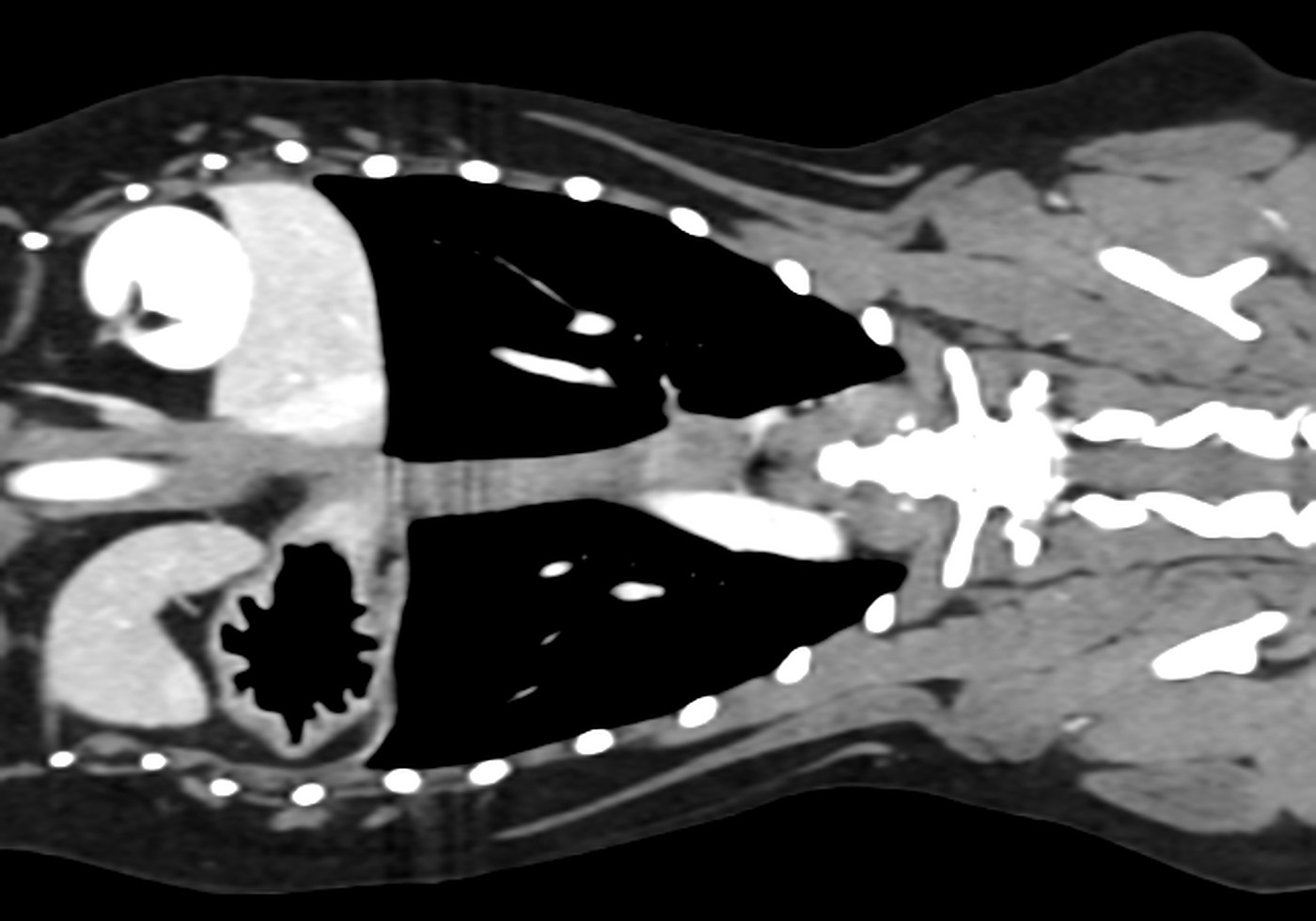
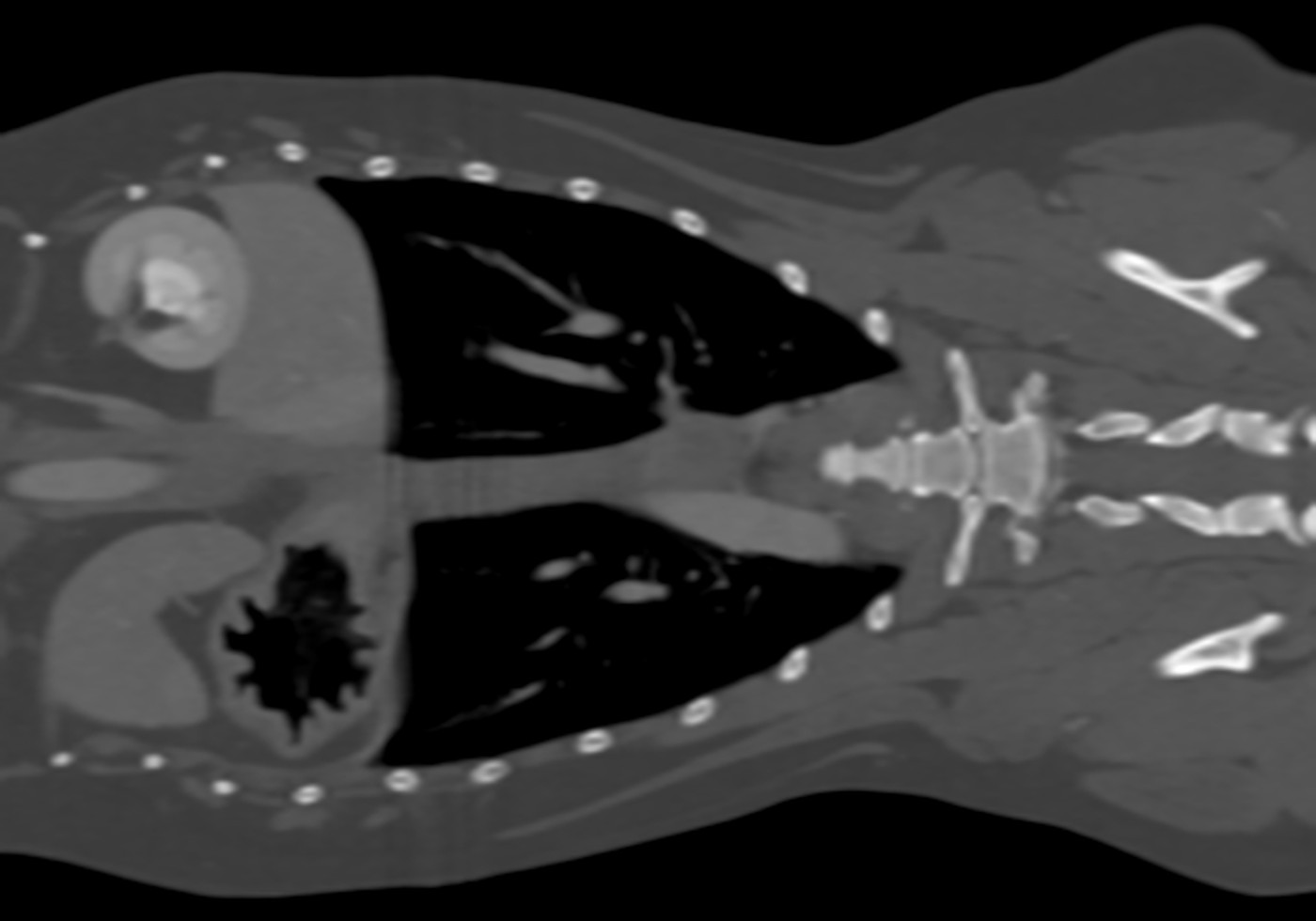
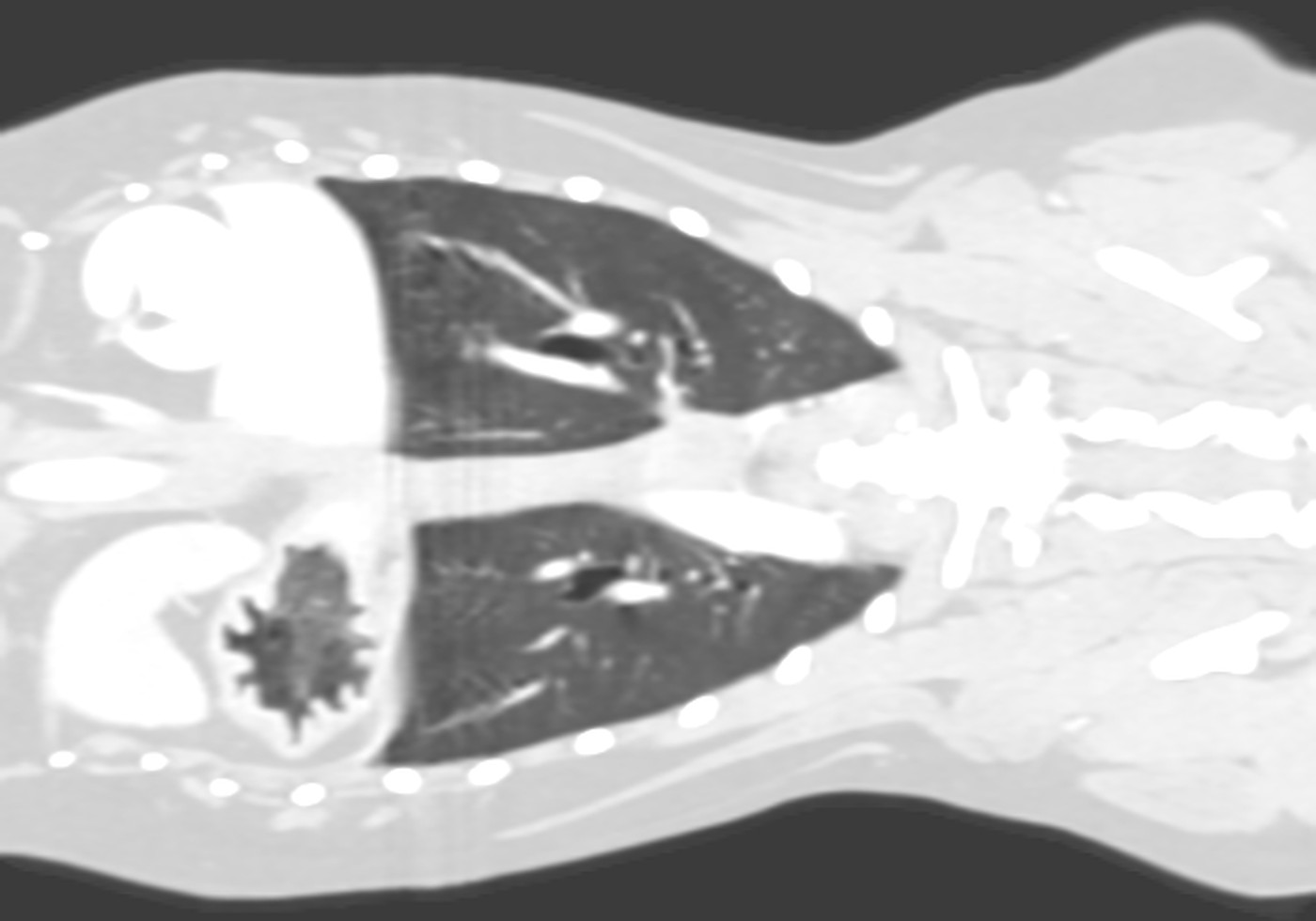 W 400 / L 40
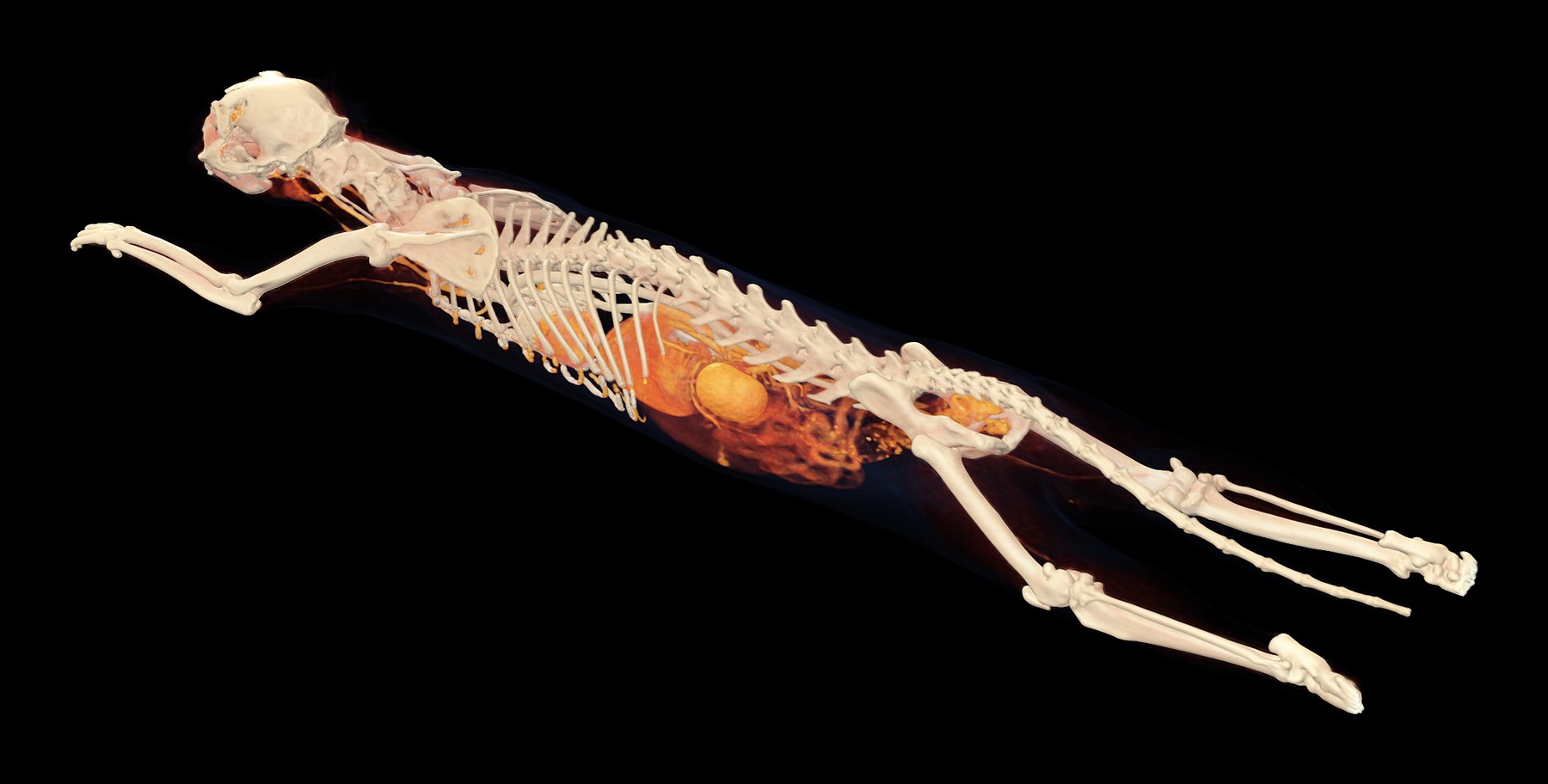
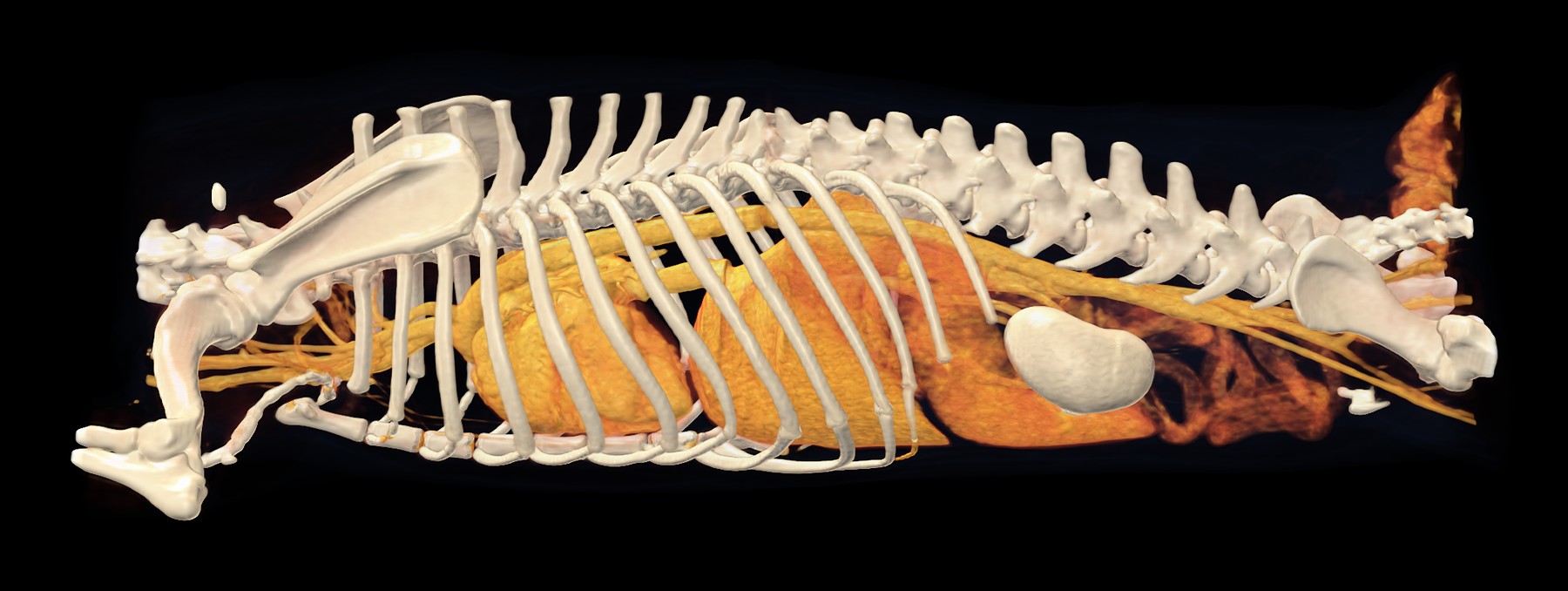
A scan is not a single picture. It is a volume of densities: an X-ray merges the whole thickness of the body into one grey layer, while CT assigns a density to every point in space. That is why we read the same slice three times, for organs, for bone and for lungs, and from the same volume we build a skeleton without soft tissue, or vessels without bone. With no extra radiation and no extra anaesthesia.
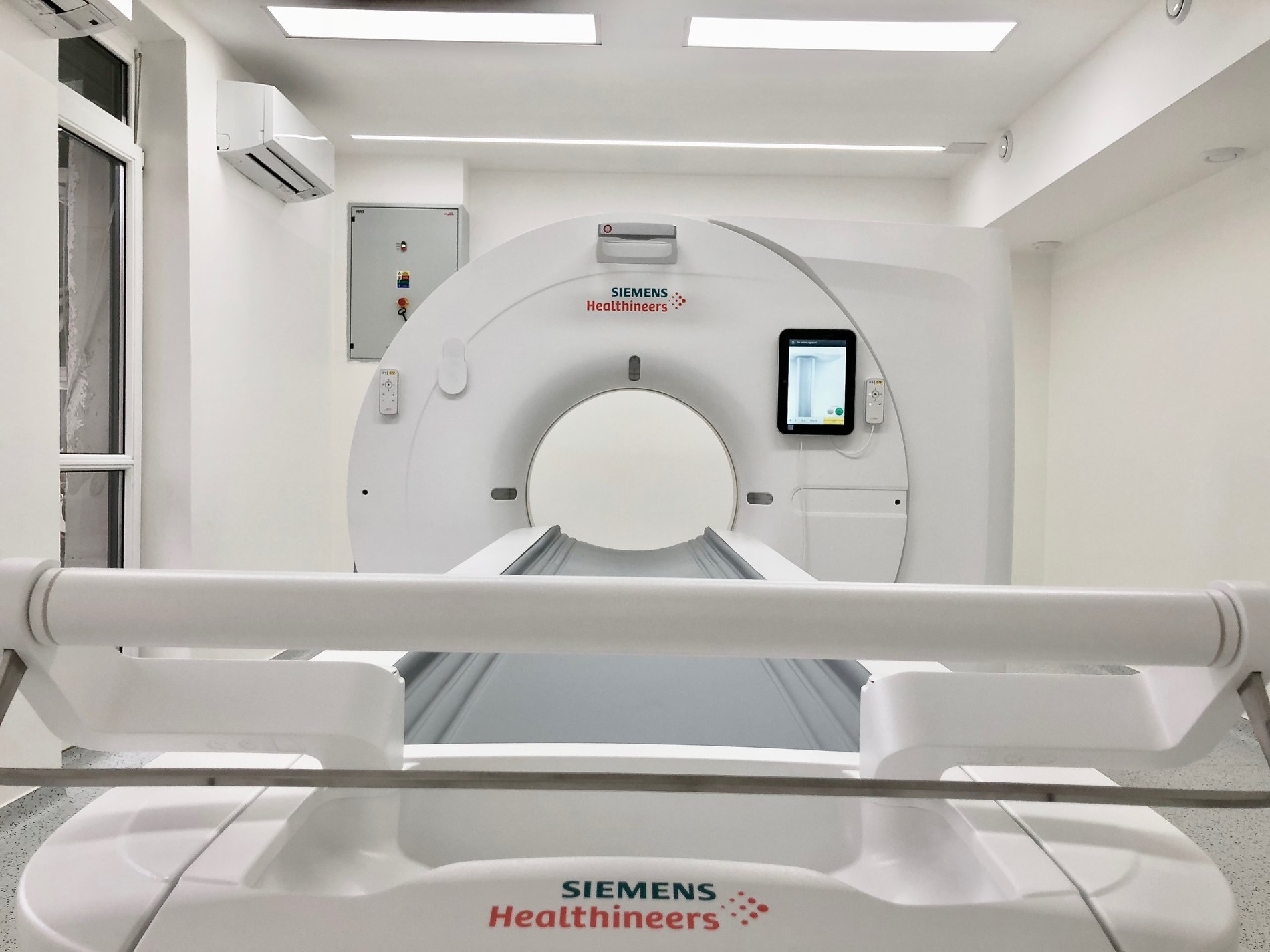
We scan on a Siemens SOMATOM go.Now with the Stellar detector: 32 submillimetre slices per rotation, SAFIRE iterative reconstruction and automatic dose adjustment to the size of the patient.
- Slices per rotation
- 32
- Slice thickness
- 0.6 to 2.0 mm
- Scan time
- under 20 seconds
- Dose reduction (SAFIRE)
- up to 60%
A machine does the scan.
A person makes the diagnosis.
MVDr. Ladislav Stehlík, Ph.D.
Clinical lead
Academic in diagnostic imaging: radiology, ultrasonography and computed tomography. Training placements under the supervision of Prof. Massimo Vignoli, Dip. ECVDI.
MVDr. Tamara Zimanová
Reporting vet
She has worked in diagnostic imaging since graduating. At the hospital she is also responsible for digital radiography, so she knows the patients both before and after CT.
Staromestská 6/D,
Bratislava
If you are not sure whether CT is the right examination, call us before you pay. We will tell you straight, and if a different examination would be better for the patient, we will point you to it.
Our CT unit is in the building of the Vetline veterinary hospital, which is open 24/7. With anaesthesia, this is no small detail: if something goes wrong, help is right next door, not a drive away.